Science

Asteroids & Comets

Astrometric and photometric observations of asteroids, comets and minor planets to support orbit determination and physical characterisation.

Asteroids

Objects observed from station M74 and reported to the Minor Planet Center, each published on an MPEC. Snapshot of the MPEC statistics for M74 with data through 10 October 2026.

Nr.PackedObjectMPECStationsObs. allObs. M74M74 share
10578657862026-T204821,538121 %
224445244452026-T2041213,137120 %
388710887102026-T204841,888121 %
40586358632026-T2041113,114120 %
50801380132026-T204531,071101 %
6A51401051402026-T2041003,431110 %
7G42161642162026-T204511,149121 %
80194319432026-T2041747,116100 %
911054110542026-T204721,615121 %
10M14552214552026-T20427333124 %
11X38893338892026-T20456923121 %
11 objects25,3151271 %

Comets

220P/McNaught

A Jupiter-family comet that has brightened in repeated outbursts through 2026

Close-up of comet 220P/McNaught showing the coma and dust tail
Close-up with the 12-inch RC
Wide-field view of comet 220P/McNaught with its tail against faint integrated flux nebulosity
Wide field with the Askar SQA85
Close-upGSO 12″ f/8 Ritchey–Chrétien
ZWO ASI294MM Pro
Luminance, 41 × 30 s (bin 2, gain 120)
Night of 14/15 Aug 2026
Wide fieldAskar SQA85
ToupTek ATR2600M
L 45 × 60 s, R, G, B 15 × 60 s each (gain 100)
20 Aug 2026
See more details on AstroBin →

Breakup of C/2025 K1 (ATLAS)

Comet C/2025 K1 ATLAS broken into three fragments
Three fragments of the comet, golden tail pointing away from the Sun

An Oort Cloud comet found by the ATLAS survey in May 2025. It skimmed past the Sun at only 0.33 AU and survived, but then fell apart into three pieces, which this image shows at about magnitude 9.5 in the pre-dawn sky.

EquipmentGSO 12″ f/8 Ritchey–Chrétien
ZWO ASI294MM Pro
ExposuresLRGB, 15 × 60 s each (bin 2, gain 120)
November 2025
See more details on AstroBin →

Comet 3I/ATLAS

Interstellar comet 3I/ATLAS with a sunward anti-tail
The interstellar comet and its sunward anti-tail

The interstellar visitor 3I/ATLAS, moving at 58 km/s on a hyperbolic path about 1.8 AU from Earth. A spike pointing toward the Sun (an anti-tail, an effect of dust seen edge-on) sits alongside the fainter normal tail, captured low in the twilight sky.

EquipmentGSO 12″ f/8 Ritchey–Chrétien
ZWO ASI294MM Pro
ExposuresLuminance, 10 × 60 s
13 Nov 2025
See more details on AstroBin →

Comet C/2025 R2 (SWAN)

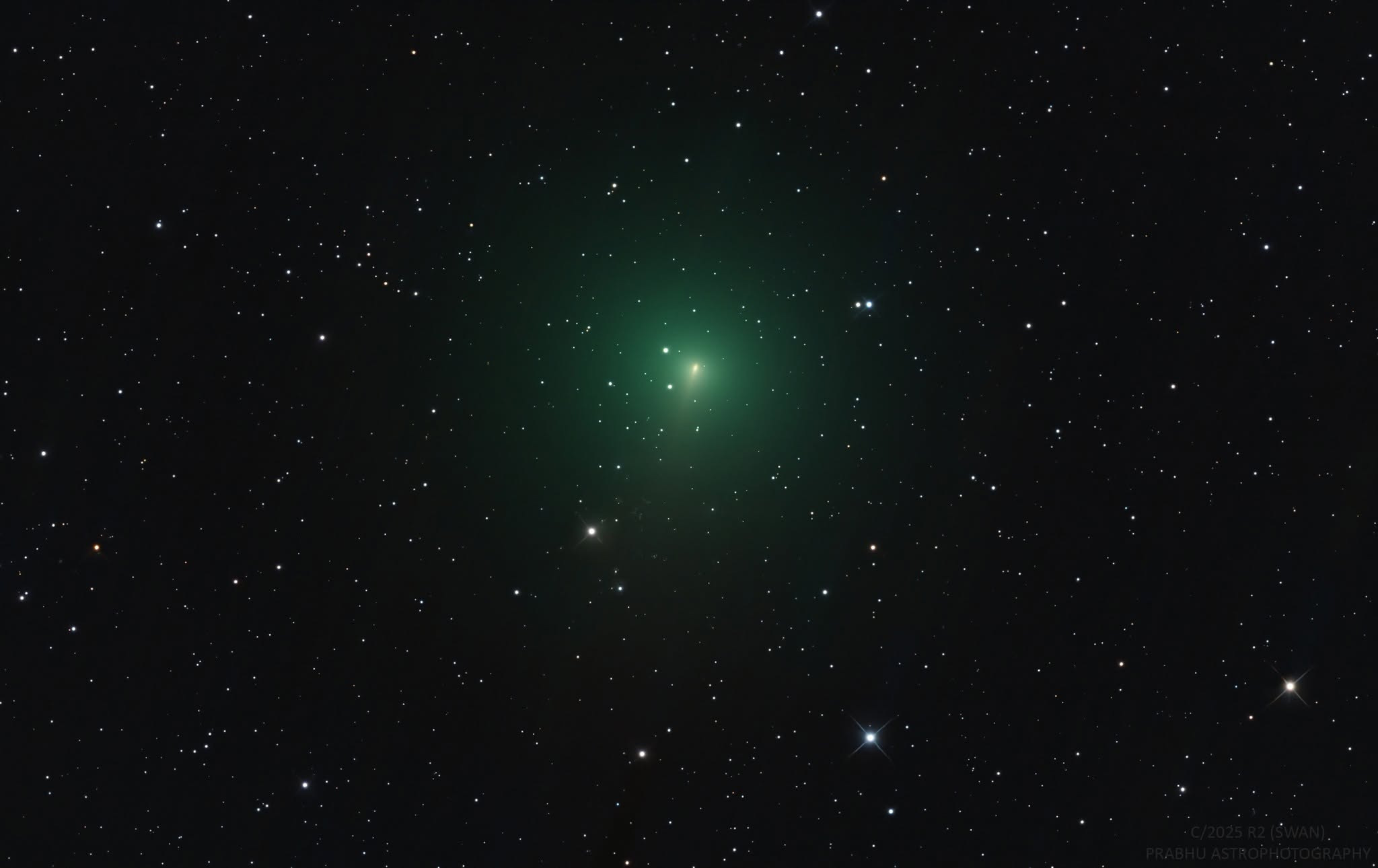
Close-up of Comet C/2025 R2 (SWAN) captured on 25.10.2025

Comet C/2023 A3 (Tsuchinshan–ATLAS)

Two evenings in October 2024

Comet Tsuchinshan-ATLAS on 23 October 2024 with a faint green coma
23 Oct 2024, a faint green glow at the front of the coma
Comet Tsuchinshan-ATLAS on 24 October 2024 with a prominent dust tail
24 Oct 2024, subtle green glow and a prominent dust tail
EquipmentGSO 12″ f/8 Ritchey–Chrétien
ZWO ASI294MM Pro
Antlia RGB
Exposures23 Oct: R, G, B 10 × 30 s each
24 Oct: R, G, B 22 × 30 s each (bin 2, gain 120)

Comet C/2022 E3 (ZTF) among satellites

Comet C/2022 E3 with gas and dust tails and satellite trails in the field
Bright gas and dust tails, with satellite trails crossing the field
EquipmentSky-Watcher Esprit 80ED
ZWO ASI294MM Pro
Sky-Watcher AZ-EQ6 GT
ExposuresLRGB, 3 min each (gain 120, bin 1)
20 Jan 2023
See more details on AstroBin →

Comet C/2023 R1 (PanSTARRS)

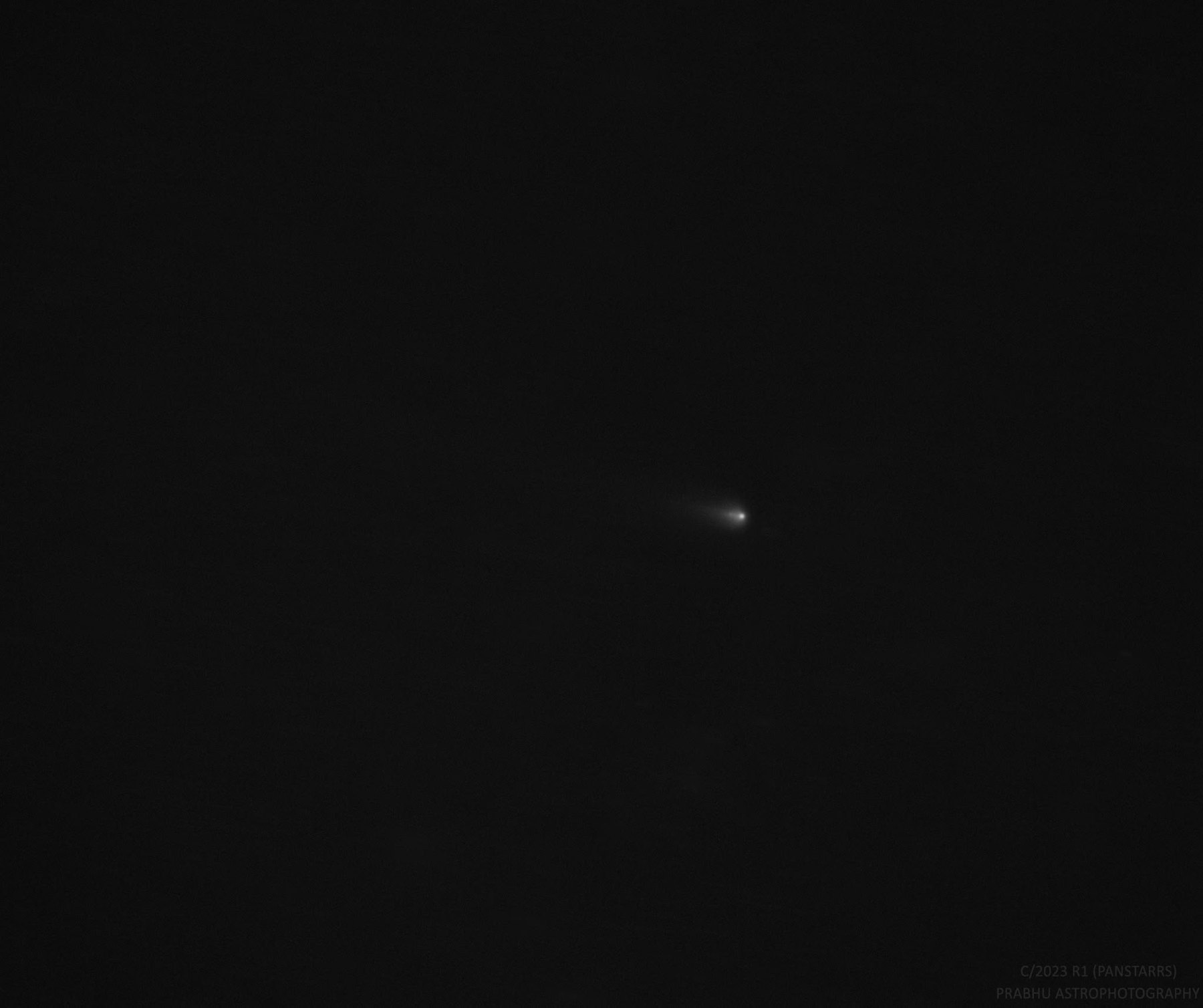
Component B, a fragment of the comet

Comet C/2023 R1 PanSTARRS component B, a small bright coma with a faint tail

Fragment astrometry relative to the nucleus, reported from station M74.

Comet NEOWISE (C/2020 F3)

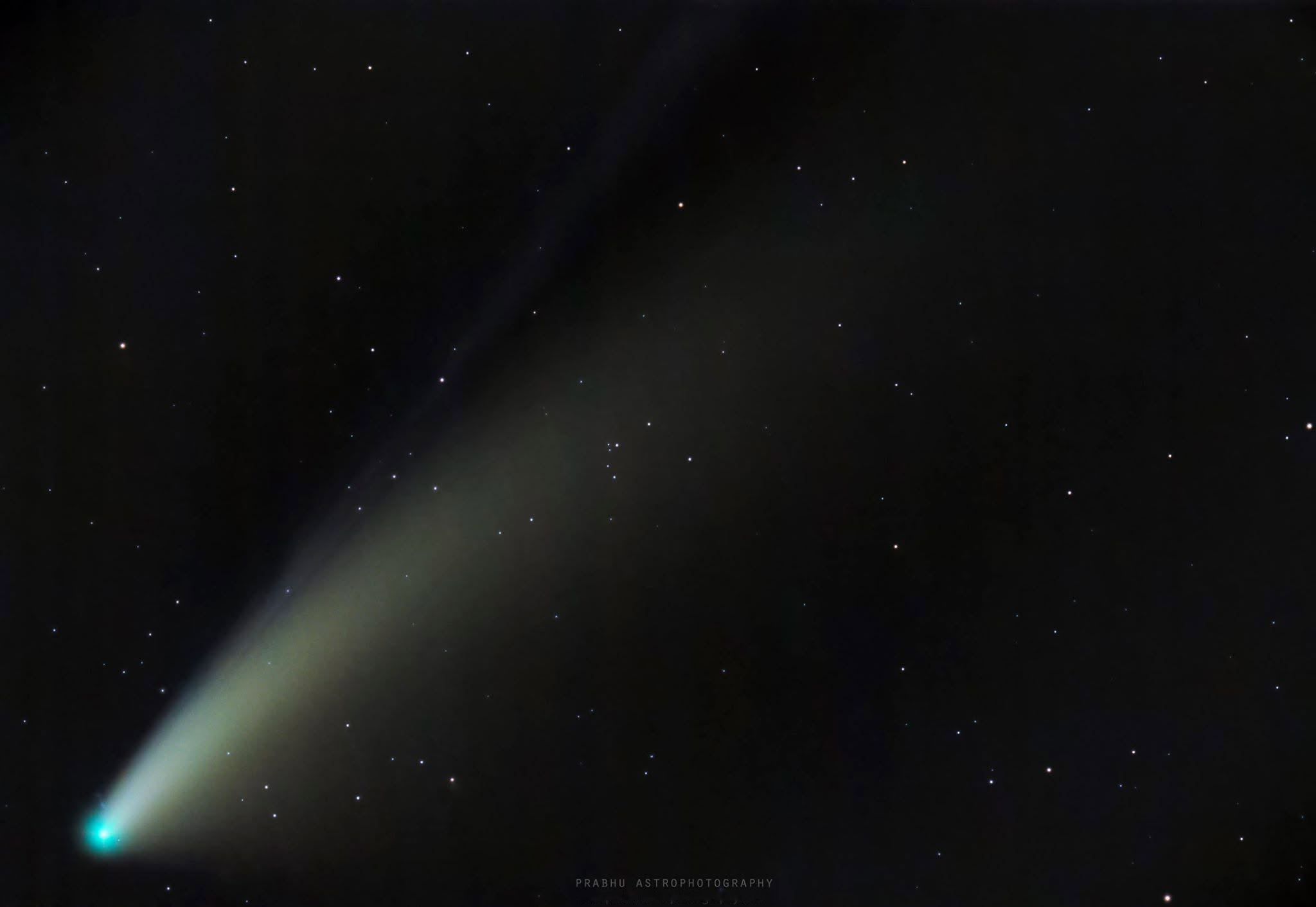
Close-up of Comet NEOWISE in colour captured on 22.7.2020